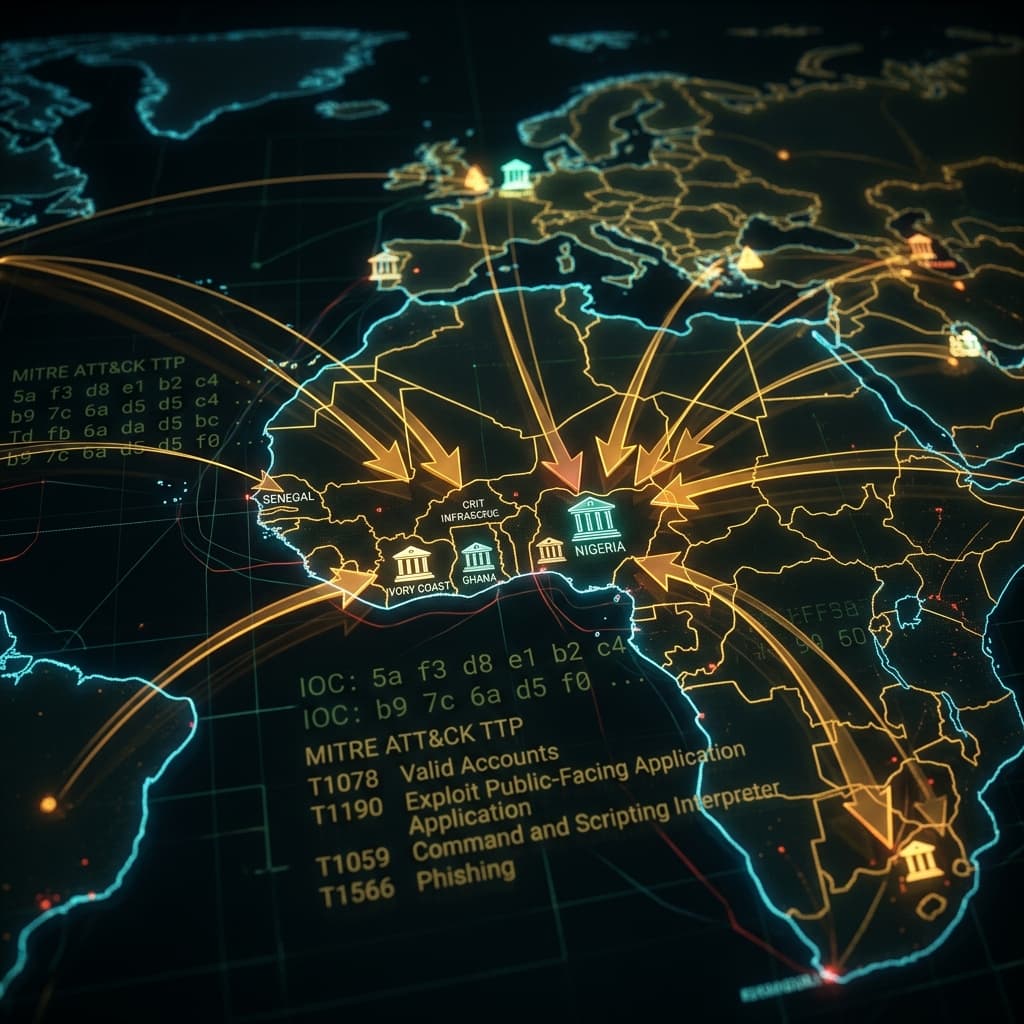
I recently attended a seminar in Accra where conversations centered on how generative and agentic AI can unlock innovation, improve productivity, and shape the future of digital transformation in Ghana.
That optimism is important.
But while the room focused on opportunity, one question stayed with me long after the event ended:
Is Ghana preparing for agentic AI at the same pace it is becoming excited about it?
That is the question this article explores.
Agentic AI is not just smarter AI
Most people already understand AI systems that can answer questions, generate text, summarize documents, or assist with research. Agentic AI goes a step further.
Instead of only responding, agentic systems can act. They can break down goals, make intermediate decisions, use tools, retrieve context, interact with software, and carry out multi-step workflows with limited supervision.
That shift is what makes them powerful.
It is also what makes them risky.
The challenge is no longer just whether an AI model can generate a wrong answer. The challenge is whether an AI system can make a wrong decision, take a wrong action, or be manipulated into doing both at scale.
Why Ghana should think about this now
Ghana is entering a period where AI is no longer just a concept discussed by researchers, students, and tech enthusiasts. It is becoming part of real conversations in fintech, telecom, education, media, consulting, e-commerce, and public services.
Teams are beginning to imagine AI agents that can:
- support operations,
- assist customer workflows,
- retrieve internal knowledge,
- automate document handling,
- route approvals,
- detect anomalies,
- and support decision-making.
That is exactly why this is the right time to ask difficult questions.
If agentic AI arrives in organizations before the right safeguards do, Ghana may end up scaling convenience faster than trust.
The real issue is not adoption — it is readiness
The discussion around AI often moves quickly from possibility to deployment.
Can it help?
Can it save time?
Can it reduce cost?
Can it improve output?
Those are valid questions.
But in the case of agentic AI, they are incomplete.
A more responsible set of questions would be:
- Who is accountable when an AI agent makes a bad decision?
- What data is the system allowed to access?
- How are its actions monitored?
- What happens if it is manipulated?
- What local realities has it been designed to understand?
- What controls exist before it touches sensitive workflows?
These are not technical details to be solved later. They are part of whether adoption should happen at all.
Accountability must come before automation
One of the first problems agentic AI creates is blurred accountability.
When an AI system is given permission to act inside a business environment, mistakes become harder to assign. If the system misroutes a payment, leaks an internal document, mishandles customer information, or triggers an unsafe workflow, responsibility can quickly become unclear.
Was it the model?
Was it the vendor?
Was it the engineer who integrated it?
Was it the team that approved its use?
Too many organizations treat AI systems as if they are smart tools without recognizing that once those tools begin to act autonomously, they become part of the organization’s risk surface.
No serious deployment should happen without clear ownership.
If an AI agent can take action, then a human team must be clearly responsible for its behavior, permissions, outcomes, and failures.
Connected systems create connected risk
Agentic AI becomes useful by being connected.
It needs access to documents, APIs, internal systems, databases, support channels, cloud tools, knowledge bases, and operational context. The more connected it is, the more capable it becomes.
But capability and exposure grow together.
A poorly secured environment can turn an AI agent into a multiplier of existing weakness. If a system has access to sensitive data, weakly protected tools, or untrusted content sources, it may process harmful input, surface private information, or take action based on manipulated context.
This is one of the biggest misunderstandings in AI adoption.
People often focus on the model, but the real risk is often in the environment around the model:
- the integrations,
- the permissions,
- the data sources,
- and the trust placed in automated behavior.
An agent does not need to be “hacked” in the dramatic sense to become dangerous. Sometimes it only needs to be trusted too early.
Ghana needs governance, not just enthusiasm
AI excitement is easy to understand. Every country wants to be part of the next wave of technological transformation. Ghana should be part of that future.
But participation without governance creates fragile systems.
Many organizations are eager to experiment with AI, yet far fewer have:
- internal AI usage policies,
- risk review processes,
- approval thresholds for sensitive automations,
- audit trails for AI decisions,
- red-team testing for AI workflows,
- or incident response plans that include autonomous system behavior.
Without these foundations, agentic AI adoption may move faster than institutional maturity.
This matters because readiness is not measured by how many tools an organization can access. It is measured by whether the organization understands how to control them responsibly.
A country does not become AI-ready simply because AI is available.
It becomes AI-ready when its institutions can adopt it without losing accountability, security, and public trust.
Imported intelligence is not always local intelligence
Another issue Ghana must think carefully about is context.
Many AI systems are designed, trained, and optimized for environments very different from Ghana’s operational realities. They may perform well in general benchmarks and still fail to understand local communication styles, fraud patterns, service structures, informal business practices, institutional bottlenecks, or region-specific risk signals.
This matters even more for agentic AI.
A chatbot that misunderstands context may be annoying. An agent that misunderstands context may act incorrectly.
That is why local adaptation matters.
The future of AI in Ghana should not only be about access to powerful systems. It should also be about building systems that understand local workflows, local risks, local languages, local user behavior, and local institutional realities.
Otherwise, we may import intelligence that sounds impressive but behaves poorly when placed inside real Ghanaian environments.
Attackers will target the decision chain
Traditional cybersecurity often focuses on users, devices, credentials, servers, and applications.
Agentic AI adds something new: the attacker may target the system’s decision-making pathway itself.
That means adversaries may try to influence the data the agent reads, poison the knowledge sources it relies on, manipulate prompts, abuse connected tools, exploit excessive permissions, or trigger automated actions through crafted inputs.
This makes AI security different from ordinary software security.
The risk is not just that the model is wrong.
The risk is that the model is trusted while wrong.
And if that model is connected to internal workflows, the impact may be subtle at first. There may be no flashy malware, no visible breach, and no dramatic shutdown. Instead, the damage may appear as quiet operational failures, poor decisions, incorrect escalations, data exposure, or manipulated business logic.
That kind of failure is harder to detect because it can look like normal automation.
A practical Ghanaian scenario
Imagine a fast-growing Ghanaian fintech company deploys an internal AI agent to help with support triage, invoice handling, merchant requests, internal knowledge retrieval, and selected approval workflows.
The goal is efficiency.
The system is connected to support documentation, customer context, internal process guides, finance dashboards, and messaging tools. It helps staff move faster and reduces repetitive manual work.
At first, everything looks fine.
Then a malicious or carefully crafted input enters the system through a support channel, document source, or connected workflow. The agent misclassifies the request, pulls the wrong internal guidance, exposes information it should not surface, or routes a sensitive action without enough human review.
There is no obvious malware infection.
No one notices immediately.
But the organization has still experienced a genuine security failure.
This is the kind of risk many teams underestimate when they think of AI only as a productivity tool.
What Ghanaian organizations should prioritize now
Before agentic AI becomes deeply embedded in mainstream workflows, organizations in Ghana should focus on a few foundational priorities.
1. Human oversight for high-impact actions
Any workflow involving money, sensitive records, approvals, customer trust, or legal consequences should retain meaningful human review. AI can assist, but it should not be allowed to silently own critical decisions.
2. Tight permission control
Agents should only access the systems and data required for their role. Over-connected AI is risky AI. Every permission should be deliberate, limited, and reviewable.
3. Monitoring designed for AI behavior
Organizations need visibility into what the agent saw, what tools it used, why it acted, and what output or action followed. Traditional logs alone may not be enough.
4. Security testing before deployment
AI systems should be tested for prompt manipulation, data leakage, unsafe tool usage, retrieval abuse, excessive trust in unverified content, and failure under unusual inputs.
5. Clear internal policy
Every serious AI deployment should be backed by internal rules around acceptable use, escalation, review, accountability, incident handling, and limits on autonomous behavior.
6. Local adaptation
AI systems deployed in Ghana should be shaped by local realities, not treated as copy-and-paste imports from very different environments. Context matters, especially when systems are expected to act.
Final reflection
Ghana should absolutely be part of the future of AI.
The energy, curiosity, and ambition around these systems are real, and that should be encouraged. Events and conversations around generative and agentic AI show that Ghana is paying attention to where technology is heading.
But attention is not the same as readiness.
Agentic AI will matter not because it can talk like a human, but because it can increasingly act like one. That is exactly why governance, oversight, security, and local context must move from side discussions to central priorities.
The real question is not whether Ghana will adopt agentic AI.
It is whether Ghana will adopt it with enough discipline to make that future trustworthy.